About Julie Scali
Deep literacy expertise. Real school experience.
I’m Julie Scali, a national literacy and school improvement specialist, learning difficulties specialist, author and former Deputy Principal with 27 years’ experience across Australia and the UK, from preschool to secondary, in mainstream, special needs, remote and high EAL/D contexts. I lead whole-school reading and writing reform, from structured synthetic phonics and rich-text instruction to SRSD writing and multi-tiered systems of support. I also lead system-level change with regions, sectors and departments across Australia.
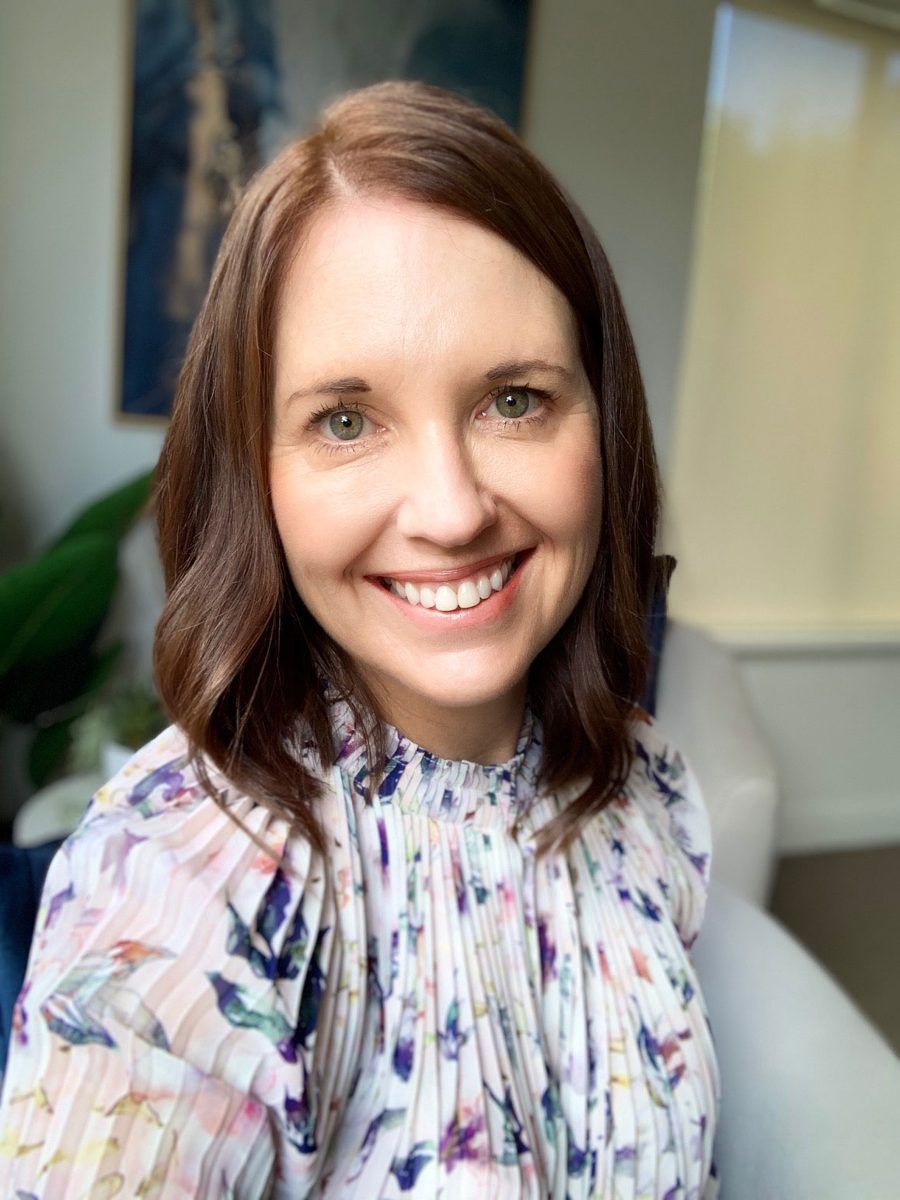
Why I do this work
As a graduate teacher with a Year 4 class, I met Jacob. After five years of school, he could read only a few words. By the end of that year, he was reading Goosebumps books. Jacob is why I do this work. Since then, I’ve made it my mission to champion every Jacob, and to help schools put the practices in place so no child reaches Year 4 unable to read.
Children only get one chance at school. No child’s future should be determined by a literacy difficulty that could have been prevented, identified or addressed.
What I believe
Every leader deserves a practical pathway for building sustainable school improvement.
Every teacher deserves the clarity, knowledge and confidence to teach literacy effectively.
Every student deserves access to the literacy knowledge, opportunities and life chances that come from high-quality instruction, regardless of their postcode, background or starting point.
My commitment to educational equity
My commitment to educational equity extends beyond the schools I work with. Since 2022, I have sponsored a child’s education through The Smith Family’s Learning for Life program, supporting educational opportunities for children experiencing disadvantage.
I understand the reality of leading improvement in schools
I understand because I’ve lived it. I’ve been the teacher, and I’ve been the school leader in hard-to-staff schools. I understand the gap between knowing what good literacy instruction looks like and actually building a school capable of delivering it consistently. That gap isn’t closed by isolated strategies or another program. So when I work with a school, I’m not interested in adding another initiative to an already impossible list. I help leaders see how the pieces fit together, and where effort will make the biggest difference for students.
Then we make the work doable.
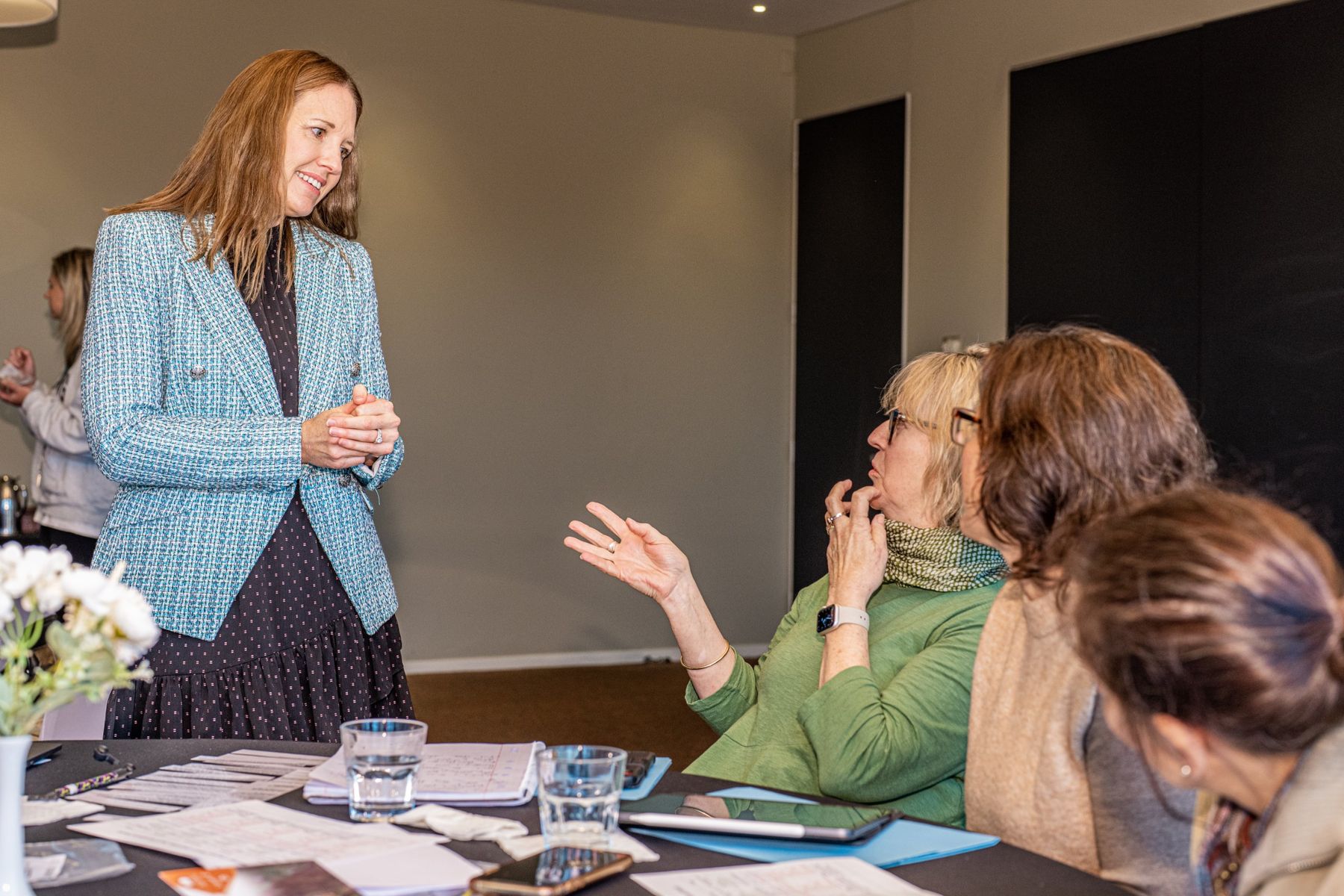
I still walk into classrooms and teach
I don’t ask teachers to implement practices I’m unwilling to demonstrate myself.
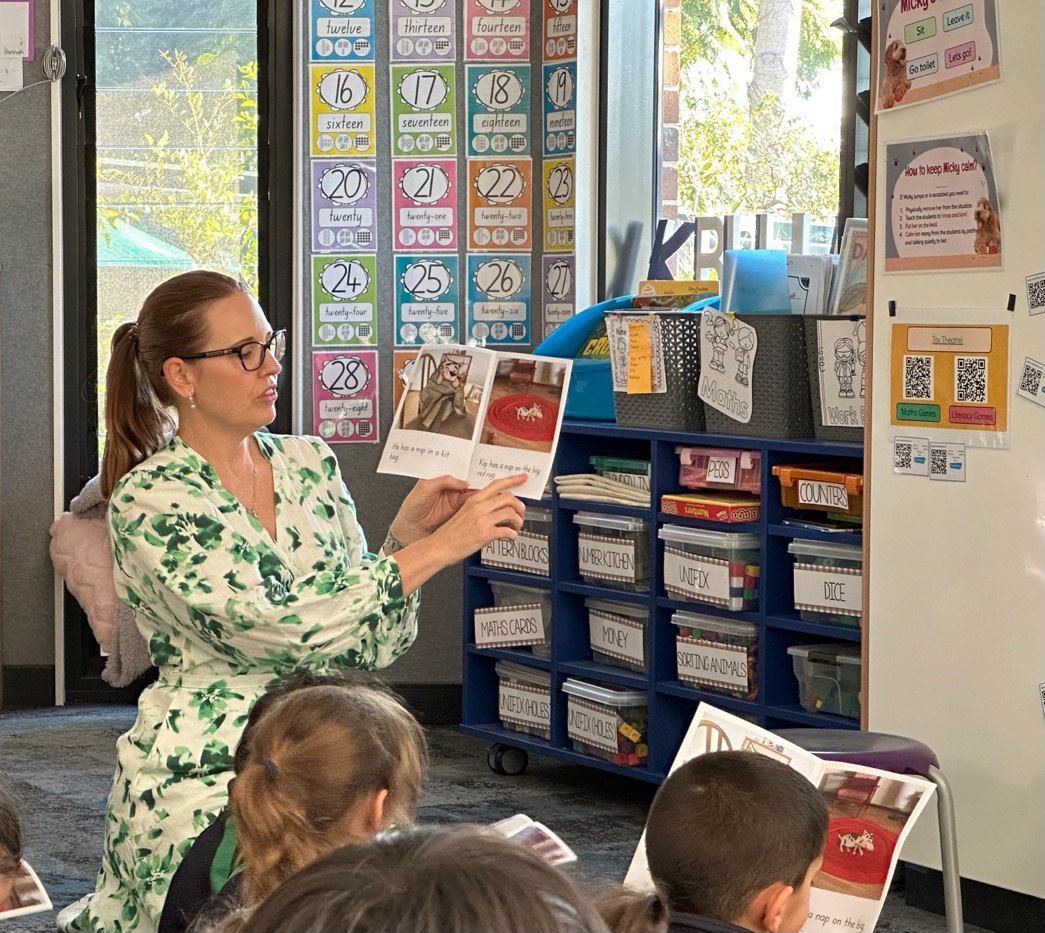
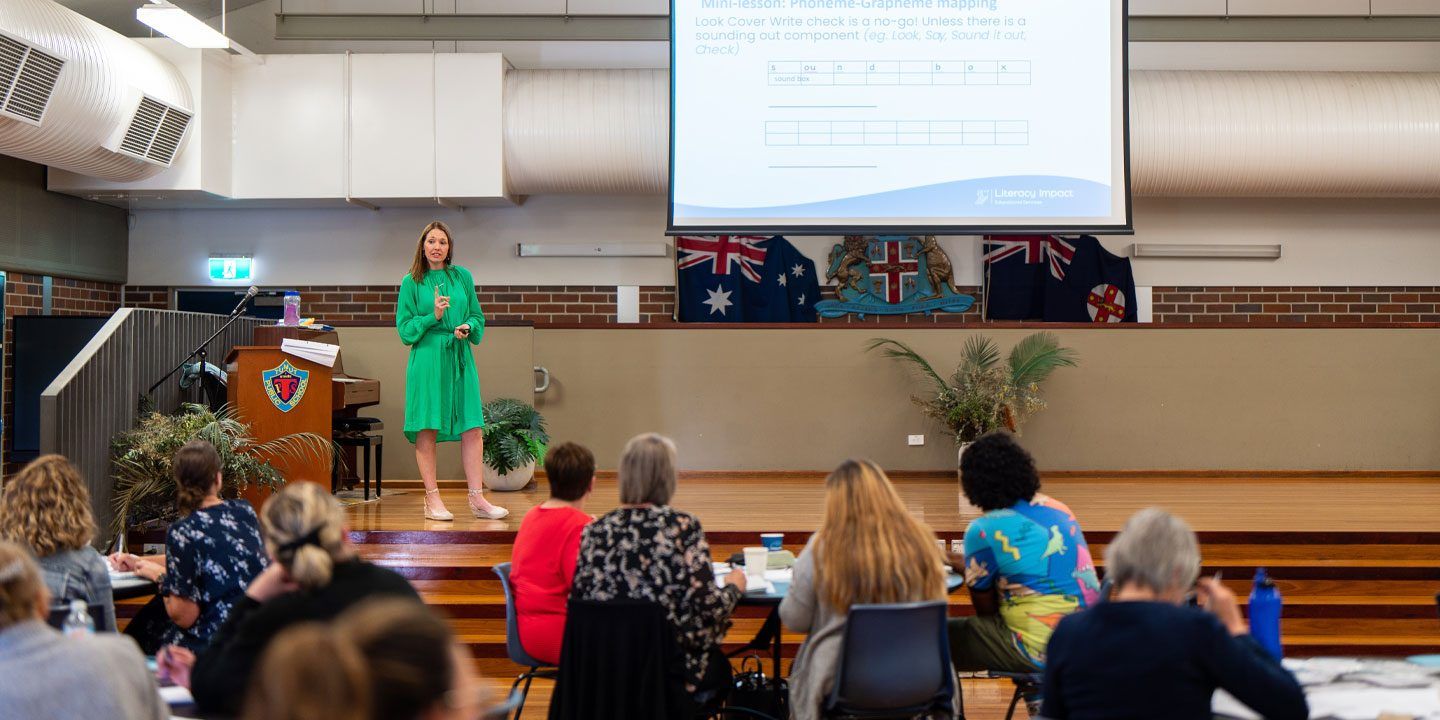
In my school partnerships, I’ve taken groups of students I’ve never met and modelled new routines while teachers observe, sometimes on camera, from preschool to secondary.
Although knowing what to teach isn’t enough, impact comes from precision and high expectations in practice.
High-leverage routines
Knowing which literacy routines give the highest leverage for reading and writing, and getting the dosage right. Repeated reading of complex, year-level texts, choral reading with immediate corrective feedback, and routines that build oral language and background knowledge.
Responsive teaching in the moment
High-quality worked examples and think-alouds, not just a slide deck. Intensity of pace, maximum response opportunities, and questioning and feedback that push every student for more. Pivoting and reteaching in the moment when students show us they need it.
Data-driven next steps
Using data in the moment and over time to decide precise next steps for every student. Explicit teaching to mastery, where the question is not “Did I get through the content?” but “What did students actually learn?”
Whole-school writing improvement
Leading whole-school writing reform through SRSD
Alongside whole-school literacy and reading reform, I partner with schools and systems across Australia to build teacher capability and lead whole-school, text-level writing reform through Self-Regulated Strategy Development (SRSD). SRSD teaches students the strategies skilled writers use to plan, draft and revise, along with the goal setting and positive self-talk to use them independently. Developed by Dr Karen R. Harris, SRSD is supported by more than 40 years of research showing significant improvements in writing quality, text length, knowledge of writing and students’ self-efficacy (Graham, Harris & McKeown, 2013).
Impact on students
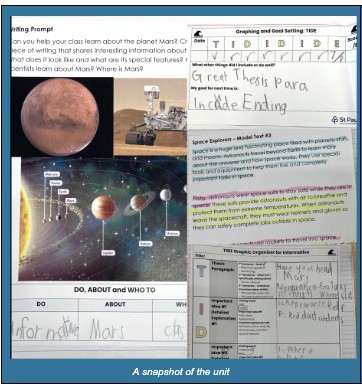
After seven months of SRSD, students chose to play “teacher” during wet-weather lunch, writing TREE on the whiteboard and modelling positive self-talk to each other. A student whose first response to anything hard used to be “I quit” now rubs out, revises and tries again. His mum emailed to say he’d been talking about TREE at home all week.
St Paul’s Anglican Grammar, Victoria
SRSD writing improvement
Endorsed by Dr Karen R. Harris, co-creator of SRSD and Regents Professor Emeritus at Arizona State University, on Julie’s 31-page SRSD unit planner:
“Your deep knowledge of SRSD is so clear, as is your own stamp on it and presentation for teachers. This is very impressive.”
Dr Karen R. Harris
My career
01 Primary classroom teacher
In Australia, England and Northern Ireland, Foundation to Year 7, including a special needs unit in London.
02 SENCO
In London for four years, leading schoolwide inclusive practices as part of the senior leadership team.
03 Support Teacher Learning Difficulties
With the Centre for Inclusive Schooling (now SSEN:D), WA Department of Education, supporting principals statewide to strengthen multi-tiered systems of support (MTSS).
04 Deputy Principal
For eight years across two schools in high and low ICSEA areas, leading whole-school improvement, implementation of structured literacy blocks and Response to Intervention.
05
Since founding Literacy Impact™ in 2021
From preschool to secondary, metropolitan schools to very remote Northern Territory communities, including one where classes were held under a mango tree.
100+
schools in partnerships, professional learning and consultation
25
Top End schools (NT)
27
Big Rivers schools (NT)
16
MACS schools in SRSD professional learning (2026)
Alta-1
System-level literacy reform across all 8 WA Middle School campuses
NT Christian Schools
Early Childhood Preschools
Qualifications and recognition
Bachelor of Education (Primary), Murdoch University
Graduate Certificate of Education (Learning Difficulties), Edith Cowan University. Fogarty Scholar and Highest Score Prize winner
2025 Learning Difficulties Australia Bruce Wicking Award
Show all qualifications (3 more)
Former Editor of the LDA Bulletin and LDA Council member
Expert advisor: Grattan Institute MTSS Panel (2023), Ochre Education (2024), SSEN:D Board Advisor, DoE WA (2025–)
AusMumpreneur Awards finalist, Education and Training, 2026
Affiliations

The book
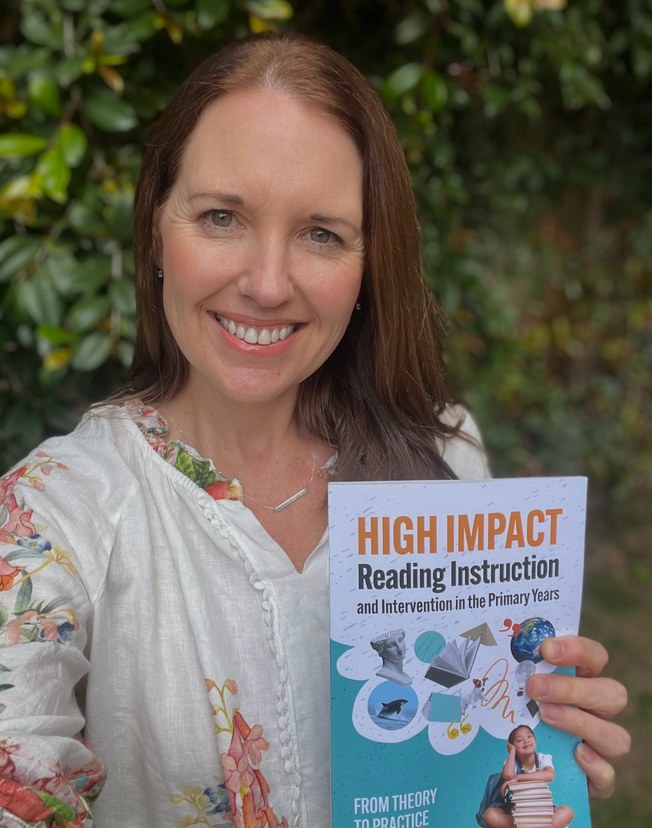
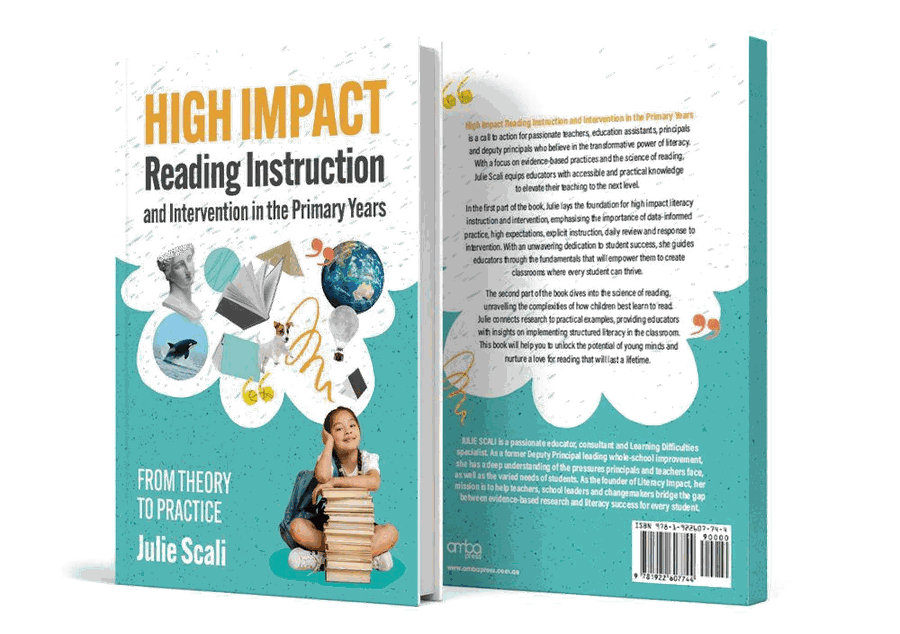
High Impact Reading Instruction and Intervention in the Primary Years (Amba Press) turns the research on reading into practical classroom and intervention routines.
“I think it should be mandated reading for every university student who is studying to become a teacher.”
Jane Killeen, Mentone Girls Grammar
“Implementing the approaches outlined in this book will result in a significant improvement in reading achievement. It is a must read.”
Donna Reeves, Principal, Tumut Public School, NSW
“She marries practice with pedagogy with ease. I have seen Julie putting these words into action in the years before she put them into print.”
Zoe Sharman, retired Headteacher, London
Frequently asked questions
Who is Julie Scali?
Julie Scali is a national literacy and school improvement specialist, author and former school leader with 27 years in schools across Australia, England and Northern Ireland. She founded Literacy Impact™ in 2021 to help school leadership teams build lasting literacy improvement.
Does Julie still teach in classrooms?
Yes. Julie models routines with students so teachers can see the practice in action: online through video in the partnership, and in person on request.
Does Julie work with schools on SRSD?
Yes. Julie leads whole-school SRSD writing improvement across Australia, from whole-class instruction to Tier 2 and Tier 3 intervention, and her SRSD work is endorsed by Dr Karen R. Harris, co-creator of SRSD.
I help schools achieve what they often struggle to achieve alone: turning evidence into action, action into impact, and impact into lasting change.
Next step