
WRISE™ Literacy Exercise Books
The skill being taught should decide the page.
Five graduated dotted-midline rulings that support handwriting development from formation and placement to fluency and automaticity.
Order by Friday 20 November 2026 to have books in classrooms for Term 1, 2027.
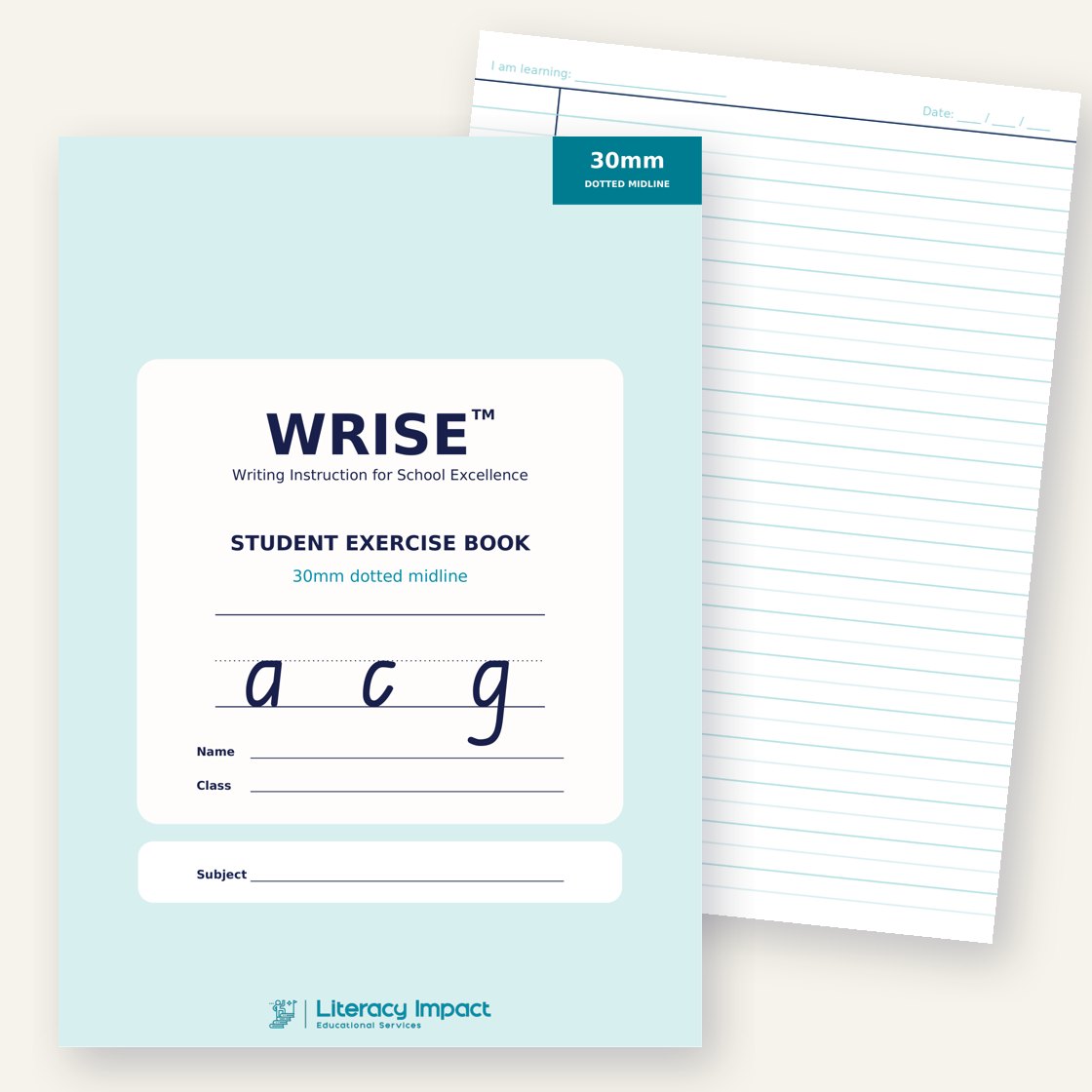
The problem
Most exercise books were never designed with the handwriting skill in mind.
Schools tend to buy whatever ruling a year level has always used. Yet handwriting develops through distinct skills: orientation, formation, placement, relative size, consistency, fluency and automaticity. Each one asks something different of the student, and of the page.
WRISE™ Literacy Exercise Books were designed so the page can change as the skill changes.
What makes WRISE™ different
Every page is designed around the skill being taught.
A responsive line-size progression
Five graduated rulings let teachers choose the page according to the skill being taught and the student’s demonstrated proficiency.
A purposeful dotted midline
Supports relative letter size, placement and alignment while these skills are being taught and consolidated.
The learning made visible
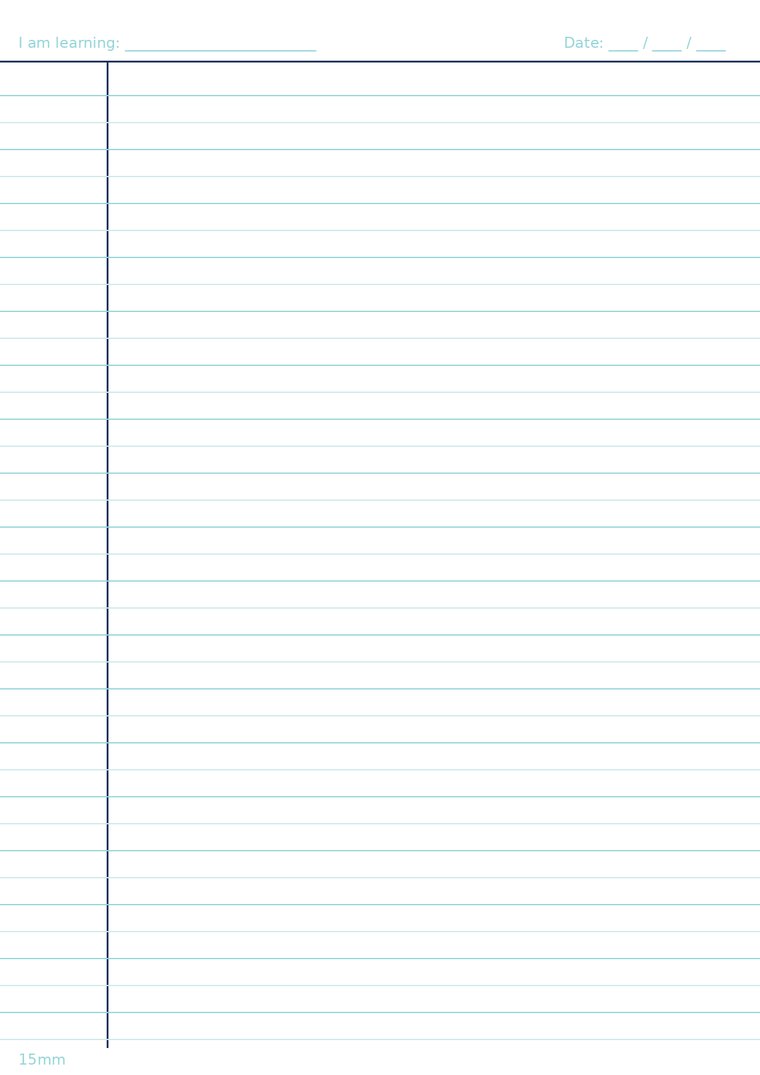
Every page opens with “I am learning” and a date, so the purpose of the work is clear and progress can be reviewed over time.
My Literacy Goals
A goals page inside the front cover supports self-assessment, peer feedback and teacher feedback.
View the range
Five graduated line sizes. One responsive instructional progression.
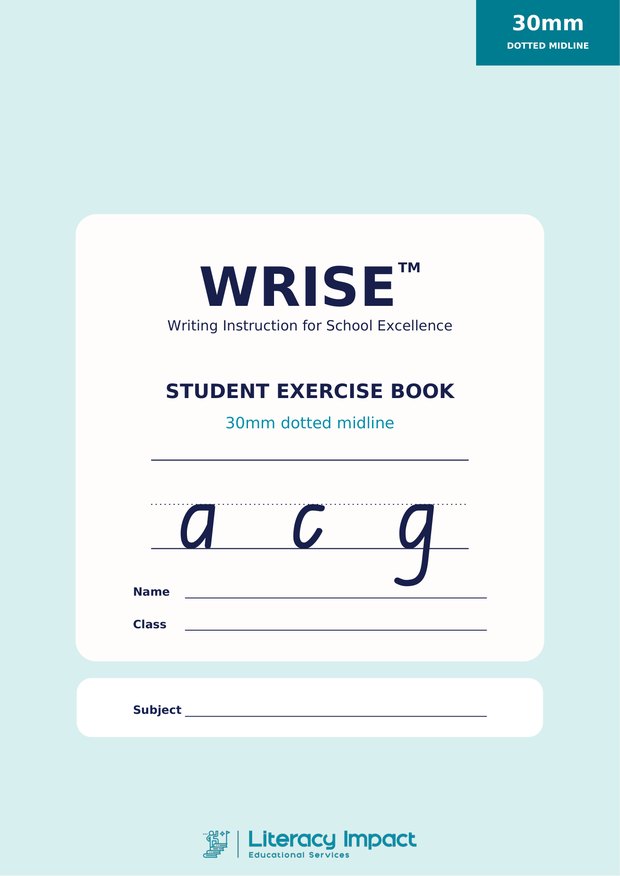
30mm
Dotted midline · Orientation + formation
Generous space while formation becomes established, supporting placement and early control of relative size.
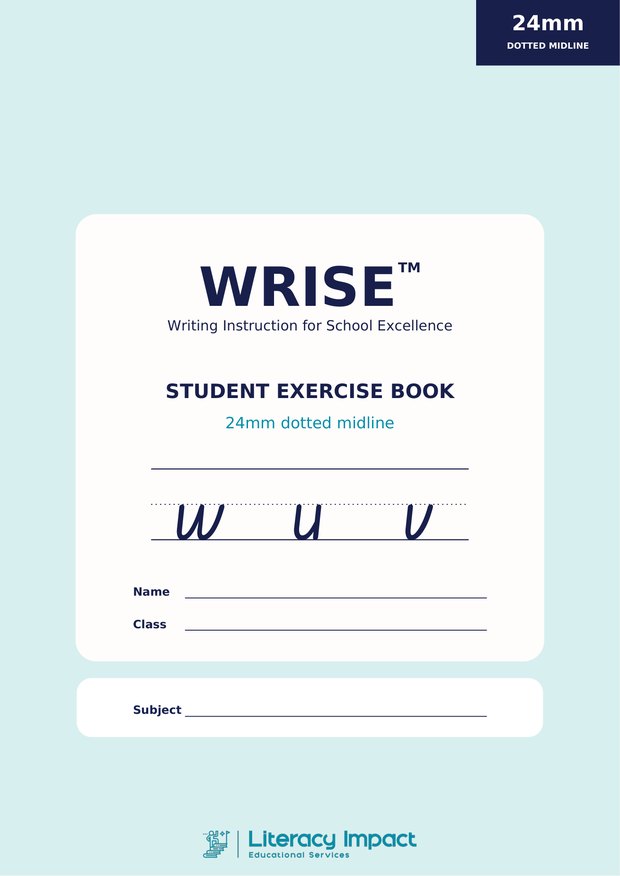
24mm
Dotted midline · Placement + sizing
Consolidates placement, proportion and legibility as movement becomes more efficient.
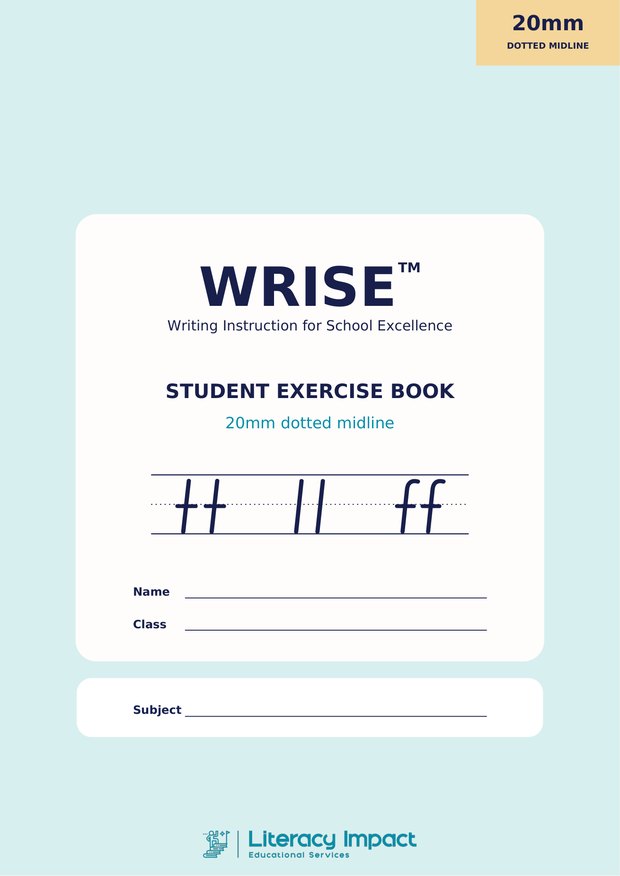
20mm
Dotted midline · Consistency + fluency
Builds consistency, alignment and fluency, with a clear midline still in place.
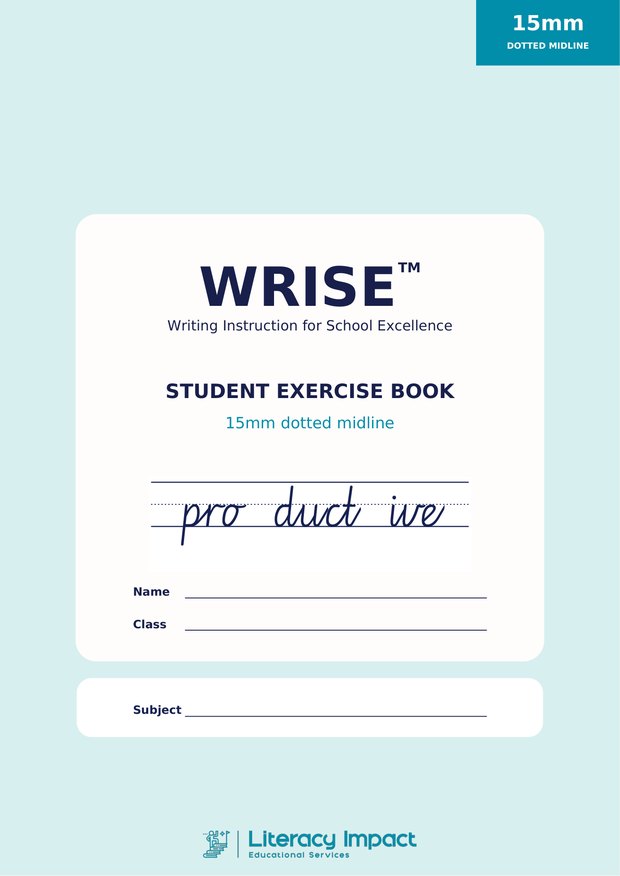
15mm
Dotted midline · Legibility + fluency
Supports increasingly fluent and automatic handwriting at a more functional size.
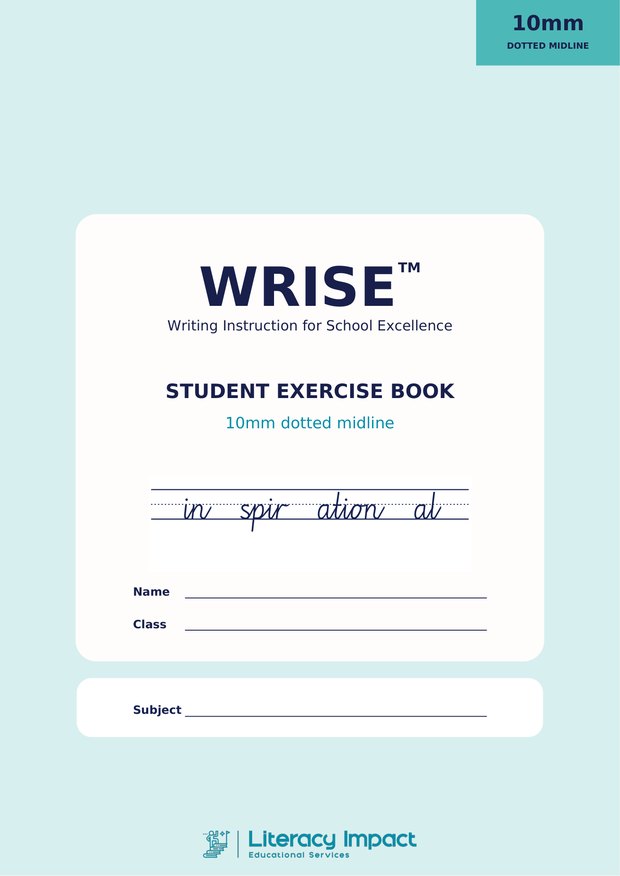
10mm
Dotted midline · Legibility + automaticity
Supports efficient, sustained writing as transcription becomes increasingly automatic.
All books A4 · 48 pages · 80gsm FSC-certified paper · printed in Australia · $5.50 inc GST per book
An indicative progression
Selected by skill and proficiency, not by year level alone.
Blank paper → 30mm → 24mm → 20mm → 15mm → 10mm → Conventional ruling
The progression is indicative, not prescriptive. Teachers select the ruling according to the skill being taught and the student’s demonstrated proficiency, not by year level alone.
A note about Foundation
Early instruction should prioritise orientation and correct letter formation. Blank paper can be the better choice at first, so students aren’t managing formation, placement, size and line boundaries all at once. Wide ruling becomes useful once formation is established and the focus moves to placement and relative size.
More than a handwriting book
One book for the whole literacy block.
WRISE™ gives students a consistent literacy workspace where explicitly taught skills are practised, applied and reviewed.
- Explicit handwriting instruction
- Phonics and spelling practice
- Dictation and formative assessment
- Sentence-level writing
- Text-level composition
- Written responses to reading
- Learning across curriculum areas
Why the progression matters
Handwriting is a motor-memory skill, and it needs to be taught to automaticity.
Copying and tracing won’t get students there on their own; explicit instruction and well-designed practice will.
When letter production is slow or effortful, it uses up attention that students also need for spelling, vocabulary, sentence construction and organising their ideas. Fluent, legible, increasingly automatic handwriting frees that attention for the harder work of composition.
WRISE™ brings this evidence together with Australian Curriculum expectations and the developmental demands of handwriting to inform the design of the page itself.
Research → Curriculum → The page
Research tells us what matters. Curriculum tells us what students are expected to learn.
Orientation and formation
Placement and relative size
Consistency
Fluency
Automaticity
Efficient written composition
Evidence-informed, not overclaimed.
Research supports explicit handwriting instruction and the development of transcription fluency and automaticity. It does not establish one ideal line width for every student in a year level. Where research doesn’t prescribe a design decision, WRISE™ is guided by curriculum and by how the skill develops.
For families
Supporting handwriting at home
The same graduated rulings used in classrooms are available for families. If your child is still building letter formation and control, or finds handwriting effortful, choosing the right line size can make practice clearer and more manageable.

Created by Julie Scali
Founder of Literacy Impact™, author of High Impact Reading Instruction and Intervention in the Primary Years and recipient of the 2025 Learning Difficulties Australia Bruce Wicking Award. Julie has spent 27 years in education, specialising in learning and literacy difficulties, and has partnered with more than 100 schools across Australia.
WRISE™ resources
Everything you need to choose, explain and order.
The A4 brochure and pre-order form to share with your team.
Research, rationale and guidelines
The evidence underpinning WRISE™, including how to teach handwriting and choose a line size.
Orders close Friday 20 November 2026.
Order
Ready for Term 1, 2027
Pre-orders close Friday 20 November 2026, and books are dispatched by 25 January 2027. Choose any mix of line sizes for your class, year level or whole school.
$5.50 per book, inc GST
A4 · 48 pages · FSC-certified paper · five dotted-midline rulings · packs of 10, 30, 60 or 100 per ruling size
How to pre-order
- Download the pre-order form.
- Choose a pack size for each ruling you need.
- Email the completed form to info@literacyimpact.com.au by Friday 20 November 2026.
- We confirm your order and delivery charge, then send an invoice. No payment is needed when you submit the form.
Ordering from outside Australia?
International ordering is coming soon. Email us to register your interest and we’ll let you know as soon as it opens.
Questions
Can I order a mix of sizes?
Yes. Choose quantities for each ruling on the pre-order form, in packs of 10, 30, 60 or 100.
Do we pay when we pre-order?
No. Literacy Impact™ confirms your order and delivery charge, then issues an invoice before your books are sent.
Can my school pay by purchase order?
Yes. Add your purchase order number to the form, or email it to info@literacyimpact.com.au.
When will books arrive?
Books will be dispatched by 25 January 2027, ready for Term 1.
How is delivery charged?
By the combined weight of your order, starting at $22.00 for up to 3kg. We’ll confirm your delivery cost by 30 November 2026, before dispatch.
Which size should I choose?
Start with the skill your students are working on now. The brochure and the Rationale and Guidelines include an indicative progression to help you decide.